
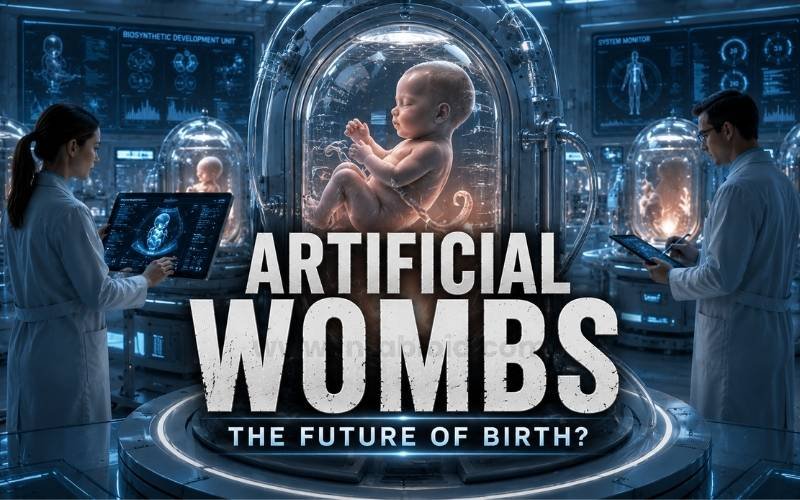

Artificial Wombs may sound like a concept from science fiction, but researchers are already developing technologies that could one day allow babies to grow outside the human body.
For thousands of years, human reproduction has remained largely unchanged.
Technology has improved healthcare, fertility treatments, and childbirth.
Yet the fundamental process of pregnancy has always depended on the human body.
Artificial Wombs could change that forever.
If successful, this technology may become one of the most transformative developments in human history.
What Are Artificial Wombs?
Artificial Wombs are systems designed to support the development of a fetus outside a biological womb.
Scientists refer to this concept as ectogenesis.
The goal is to recreate the environment normally provided during pregnancy.
This includes:
- Oxygen delivery
- Nutrient supply
- Waste removal
- Temperature regulation
- Growth monitoring
Although complete artificial wombs do not yet exist for humans, researchers have already achieved promising results in animal studies.
Why Are Scientists Developing Artificial Wombs?
The primary motivation is medical.
Artificial womb technology could potentially help:
- Premature babies
- High-risk pregnancies
- Infertility treatments
- Complicated medical conditions
Researchers believe the technology may improve survival rates for extremely premature infants.
Could Babies Be Grown Entirely Outside the Body?
This remains one of the biggest unanswered questions.
Current research focuses mainly on supporting premature development rather than replacing pregnancy completely.
However, some futurists believe full ectogenesis may eventually become possible.
If that happens, reproduction could look very different from anything humanity has experienced before.
How Could Society Change?
Artificial Wombs could affect many aspects of society.
Potential changes include:
- New family structures
- Expanded reproductive options
- Reduced pregnancy risks
- Changes in healthcare systems
The technology could also raise entirely new social and legal questions.
The Ethical Debate
Artificial Wombs generate intense ethical discussion.
Questions include:
- Who controls the technology?
- Should there be limits?
- How would parental rights work?
- Could reproduction become commercialized?
Scientists, lawmakers, and ethicists continue debating these issues.
Could Artificial Wombs Help Population Growth?
Some experts suggest future societies facing population decline may use advanced reproductive technologies to support family formation.
Others argue that social and economic factors remain far more important than technological solutions.
The long-term impact remains uncertain.
Why Is This a Future Mystery?
Human reproduction has shaped civilization for thousands of years.
Artificial Wombs could fundamentally change that process.
The technology promises major medical benefits, but it also raises questions about ethics, identity, and the future of family life.
No one knows exactly how society would adapt.
That uncertainty makes Artificial Wombs one of the most fascinating mysteries of the future.
FAQs
What are Artificial Wombs?
Artificial Wombs are systems designed to support fetal development outside the human body.
Do Artificial Wombs exist today?
Researchers have developed experimental systems, but complete human artificial womb technology does not yet exist.
What is ectogenesis?
Ectogenesis is the scientific term for gestation occurring outside a biological womb.
Why are scientists studying Artificial Wombs?
The technology could help premature babies and reduce risks associated with certain pregnancies.
Could Artificial Wombs replace pregnancy?
At present, no. Whether complete ectogenesis will become possible remains unknown.
The Bottom Line
Artificial Wombs could become one of the most revolutionary technologies in human history. While the science is still developing, the potential impact on medicine, reproduction, and society is enormous. Whether this technology ultimately transforms humanity remains one of the most intriguing mysteries of the future.