
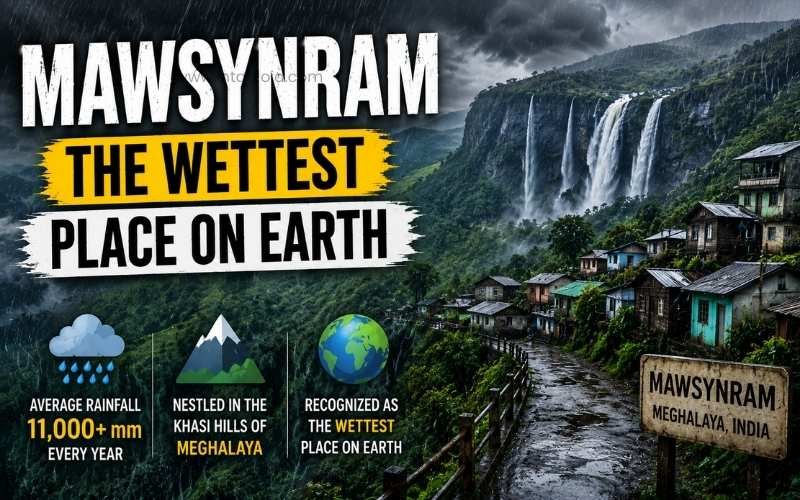

Mawsynram is widely known as the wettest place on Earth. Located in the northeastern Indian state of Meghalaya, this small village receives an astonishing amount of rainfall every year.
For most people, a rainy day is an occasional inconvenience.
In Mawsynram, rain is simply a way of life.
Clouds gather over the surrounding hills, powerful monsoon winds arrive from the Bay of Bengal, and enormous amounts of water fall from the sky.
The result is one of the most extraordinary weather phenomena on the planet.
Where Is Mawsynram?
Mawsynram is located in Meghalaya, a state famous for its lush green landscapes and heavy monsoon rains.
The village sits in the Khasi Hills, surrounded by steep terrain that plays a crucial role in its unique climate.
Despite its global reputation, Mawsynram remains a relatively small and quiet community.
Its fame comes almost entirely from the weather.
Why Does Mawsynram Receive So Much Rain?
The answer lies in geography.
Moist air travels northward from the Bay of Bengal during the monsoon season.
When these moisture-filled clouds reach the Khasi Hills, they are forced upward.
As the air rises, it cools rapidly.
This process causes massive amounts of water vapor to condense into rain.
Because Mawsynram sits directly in the path of these weather systems, it receives extraordinary rainfall year after year.
How Much Rain Falls in Mawsynram?
Mawsynram receives an average annual rainfall of more than 11,000 millimeters.
To put that into perspective, many cities around the world receive less than 1,000 millimeters annually.
Some years bring even higher totals.
During peak monsoon months, heavy rain can continue for days with little interruption.
This incredible volume of water has earned Mawsynram a place in weather records around the world.
How Do People Live There?
Life in Mawsynram has adapted to the constant rain.
Homes are designed to withstand extreme weather conditions.
People often use large umbrellas and rain protection as part of everyday life.
Local communities have developed practical solutions over generations.
For residents, the weather is not unusual.
It is simply part of their environment.
The Living Root Bridges
One of the most fascinating features of Meghalaya is its famous living root bridges.
Although many of these structures are found in nearby regions, they showcase how local communities have adapted to their rainy surroundings.
The bridges are created by guiding the roots of rubber trees across streams and rivers.
Over time, the roots grow stronger and form natural crossings.
Some of these bridges have lasted for generations.
Is Mawsynram Always Wet?
While Mawsynram experiences enormous rainfall during the monsoon season, it is not constantly raining every day of the year.
There are drier periods as well.
However, the annual rainfall totals remain unmatched by almost any other inhabited place on Earth.
That distinction keeps Mawsynram at the top of weather records.
Why Is Mawsynram Important?
Mawsynram helps scientists understand extreme weather systems and monsoon patterns.
Studying the region provides valuable information about rainfall, climate, and atmospheric conditions.
The village also highlights the remarkable ways humans adapt to challenging environments.
What might seem impossible to outsiders is normal daily life for local residents.
FAQs
Where is Mawsynram located?
Mawsynram is located in Meghalaya, India.
Why is Mawsynram famous?
Mawsynram is famous for being the wettest inhabited place on Earth.
How much rain does Mawsynram receive?
The village receives more than 11,000 millimeters of rainfall annually on average.
Is Mawsynram the rainiest place in the world?
Yes. Mawsynram is generally recognized as the wettest inhabited place on Earth.
Can tourists visit Mawsynram?
Yes. Visitors travel to the region to experience its unique climate and natural beauty.
The Bottom Line
Mawsynram is one of the most remarkable places on Earth. Its extraordinary rainfall, dramatic landscapes, and unique way of life make it unlike almost anywhere else in the world. While most people try to avoid rain, the residents of Mawsynram have learned to live with more of it than nearly anyone else on the planet.