
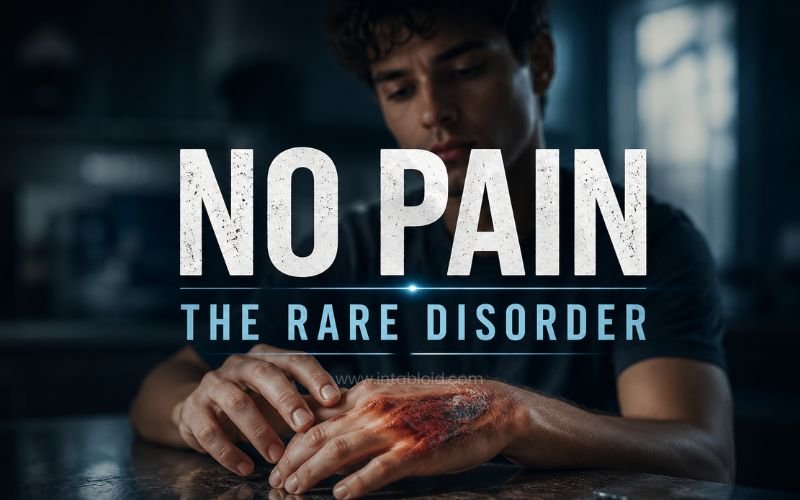

Congenital Insensitivity to Pain is a rare disorder that prevents people from feeling physical pain. While most people see pain as something unpleasant, it plays an essential role in protecting the body from injury and danger.
Imagine touching a hot stove and feeling nothing.
Or breaking a bone without realizing it.
For people with Congenital Insensitivity to Pain, these situations can become reality.
This unusual condition has fascinated scientists for decades and remains one of the most remarkable mysteries of the human body.
What Is Congenital Insensitivity to Pain?
Congenital Insensitivity to Pain, sometimes called congenital analgesia, is a rare genetic condition in which a person cannot feel physical pain.
The disorder is usually present from birth.
People with the condition can still feel touch, pressure, and temperature to varying degrees, but pain signals either do not reach the brain properly or are not processed normally.
As a result, injuries that would immediately alarm most people may go completely unnoticed.
Why Is Pain Important?
Most people think of pain as a problem.
In reality, pain is one of the body’s most important warning systems.
Pain helps us:
- Avoid dangerous situations
- Protect injured body parts
- Recognize illness
- Prevent further damage
Without pain, even minor injuries can become serious.
This is why Congenital Insensitivity to Pain can be far more dangerous than it sounds.
How Do People Discover They Have It?
Many cases are identified during childhood.
Parents may notice unusual behavior such as:
- Not crying after injuries
- Continuing to play despite broken bones
- Ignoring cuts and burns
- Frequently suffering unexplained injuries
Because children with Congenital Insensitivity to Pain cannot rely on pain signals, they often require close supervision.
What Causes Congenital Insensitivity to Pain?
Researchers have identified several genetic mutations linked to the condition.
These mutations affect nerves responsible for transmitting pain signals throughout the body.
When these nerves do not function correctly, the brain never receives normal pain warnings.
Although scientists understand some of the genetics involved, many questions remain unanswered.
Is Never Feeling Pain a Superpower?
It may sound like one.
Movies and television often portray pain-free individuals as nearly invincible.
The reality is very different.
People with Congenital Insensitivity to Pain face serious risks throughout their lives.
Without pain as a warning system, they may:
- Walk on broken bones
- Ignore infections
- Suffer severe burns
- Experience repeated injuries
Many experts consider the condition more dangerous than beneficial.
How Rare Is the Condition?
Congenital Insensitivity to Pain is extremely rare.
Only a small number of cases have been documented worldwide.
Because of its rarity, many doctors may never encounter a patient with the condition during their careers.
This scarcity also makes scientific research more challenging.
What Can Scientists Learn From It?
Researchers study Congenital Insensitivity to Pain because it offers valuable insights into how pain works.
Understanding the genes involved may help scientists develop better treatments for chronic pain conditions.
Some researchers hope these discoveries could eventually lead to safer pain-management therapies.
Living Without Pain
People with Congenital Insensitivity to Pain often learn to monitor themselves carefully.
Regular medical checkups become important.
Families and caregivers must watch for injuries that might otherwise go unnoticed.
In many cases, awareness and prevention become the primary tools for staying healthy.
One of the Body’s Greatest Mysteries
Pain is something most people try to avoid.
Yet this condition demonstrates just how important pain truly is.
Congenital Insensitivity to Pain reminds us that even unpleasant sensations serve a purpose.
Without them, everyday life can become unexpectedly dangerous.
FAQs
What is Congenital Insensitivity to Pain?
It is a rare genetic disorder that prevents people from feeling physical pain.
Can people with the condition feel anything?
Many can still feel touch, pressure, and temperature, although experiences vary.
Is Congenital Insensitivity to Pain dangerous?
Yes. The inability to feel pain can lead to serious injuries and health complications.
Is it the same as having a high pain tolerance?
No. People with high pain tolerance still feel pain. Individuals with Congenital Insensitivity to Pain do not.
Can the condition be cured?
There is currently no cure, but proper medical care can help manage the risks.
The Bottom Line
Congenital Insensitivity to Pain is one of the rarest and most fascinating medical conditions ever discovered. While never feeling pain may sound appealing, the condition reveals how important pain is for survival. By studying this rare disorder, scientists continue learning more about the complex relationship between the brain, nerves, and human perception