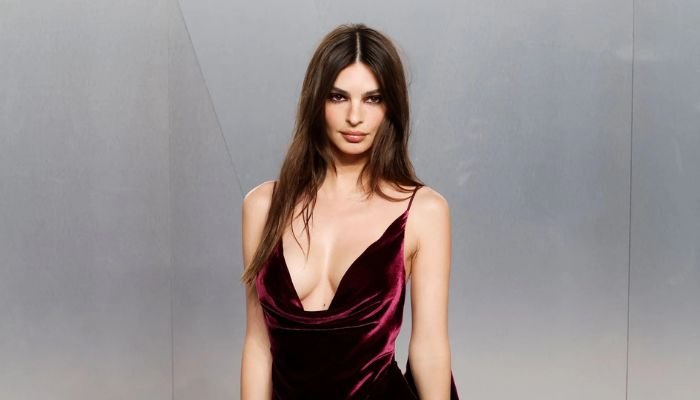
Emily Ratajkowski is an American model, actress, author, and entrepreneur who rose to international fame after appearing in Robin Thicke’s hit music video Blurred Lines in 2013. She has since built a successful career in fashion, acting, and business, working with leading brands and appearing in films such as Gone Girl, We Are Your Friends, I Feel Pretty, and Lying and Stealing. She is also the founder of the swimwear brand Inamorata and the author of the bestselling essay collection My Body.
Born in London, England, to American parents and raised in Encinitas, California, Emily began modelling at the age of 14 after signing with Ford Models. Her confidence, fashion sense, and advocacy for women’s rights have made her one of the most influential personalities in the entertainment industry. Fans frequently search for Emily Ratajkowski Age, Height, Weight, Figure Measurements, Body Measurements, Bra Size, Biography, Wiki, Family, Net Worth, and Instagram Account. This article covers her life, career, physical appearance, and personal details.

Emily Ratajkowski Wiki / Biography
| Information |
Details |
| Emily Ratajkowski Full Name |
Emily O’Hara Ratajkowski |
| Emily Ratajkowski Profession |
Model, Actress, Author & Entrepreneur |
| Emily Ratajkowski Age |
35 Years (2026) |
| Emily Ratajkowski Date of Birth |
7 June 1991 |
| Emily Ratajkowski Birthplace |
Westminster, London, England |
| Emily Ratajkowski Nationality |
American |
| Emily Ratajkowski Zodiac Sign |
Gemini |
| Emily Ratajkowski Religion |
Judaism (family background) |
| Emily Ratajkowski Ethnicity |
Polish, Irish, Jewish & German ancestry |
| Emily Ratajkowski School |
San Dieguito Academy |
| Emily Ratajkowski College |
University of California, Los Angeles (Dropped Out) |
| Emily Ratajkowski Education |
College Dropout |
| Emily Ratajkowski Years Active |
2004 – Present |
| Emily Ratajkowski Debut Movie |
Andrew’s Alteration (2004) |
| Emily Ratajkowski Debut TV Show |
iCarly (2009) |

Emily Ratajkowski Early Life
Emily Ratajkowski was born on 7 June 1991 in Westminster, London, England, to American parents John David Ratajkowski and Kathleen Balgley. Soon after her birth, the family moved to Encinitas, California, where she spent most of her childhood. She developed an interest in acting, theatre, ballet, and modelling at a young age.
At the age of 14, Emily signed with Ford Models and started working in commercial modelling while continuing her education. She later enrolled at the University of California, Los Angeles (UCLA) to study Fine Arts but left after one year to pursue modelling full-time.
Emily Ratajkowski Career
Emily Ratajkowski started her career with child acting roles before becoming a professional model. Her breakthrough came in 2013 after appearing in Robin Thicke’s controversial music video Blurred Lines, which brought her worldwide recognition. She subsequently appeared in the Maroon 5 music video Love Somebody and began modelling for leading fashion magazines and luxury brands.
She made her major film breakthrough with Gone Girl (2014), followed by roles in Entourage, We Are Your Friends, I Feel Pretty, Cruise, Welcome Home, and Lying and Stealing. In addition to acting and modelling, Emily launched her fashion label Inamorata in 2017 and published her bestselling memoir My Body in 2021, receiving praise for its exploration of feminism, celebrity, and body image.
Emily Ratajkowski Movies & TV Shows
Popular Movies
- Gone Girl
- We Are Your Friends
- Entourage
- I Feel Pretty
- Cruise
- Welcome Home
- Lying and Stealing
- Andrew’s Alteration
Popular TV Shows
- iCarly
- The Spoils Before Dying
- Easy
- Bright Futures
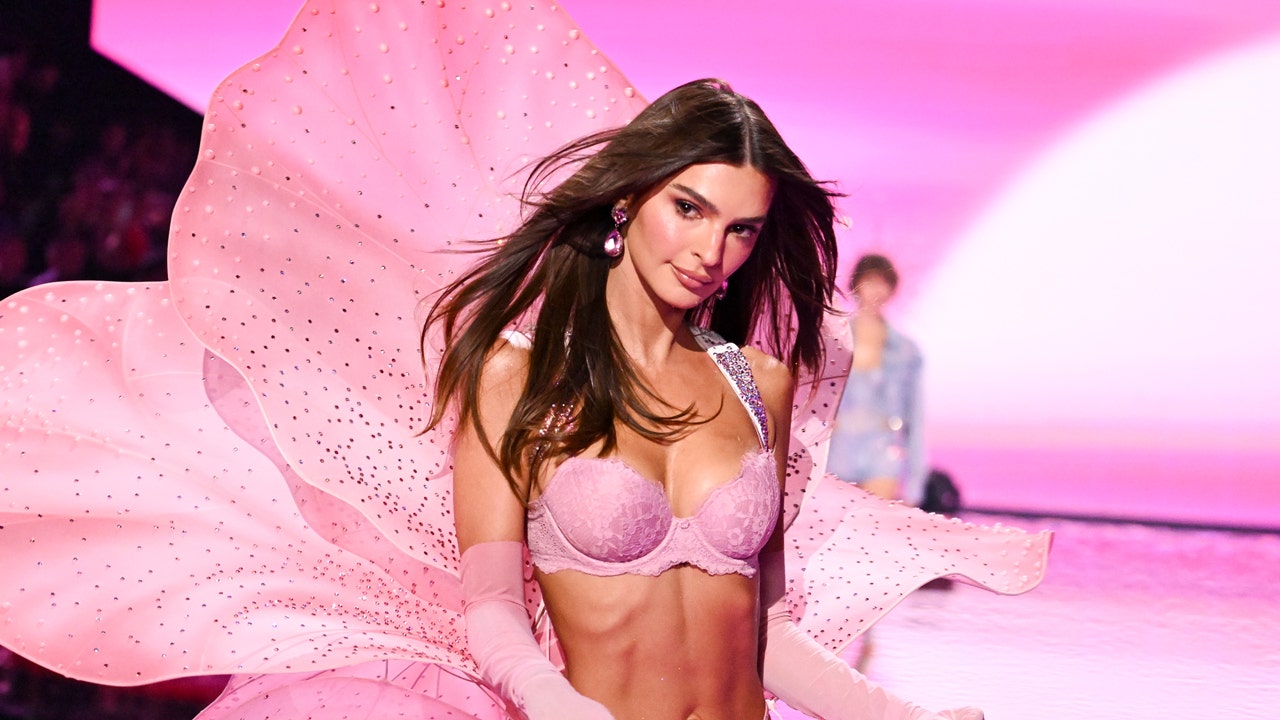
Emily Ratajkowski Awards & Achievements
- Rose to international fame through Blurred Lines.
- Featured in Sports Illustrated Swimsuit Issue.
- Walked for leading fashion brands including Versace, Marc Jacobs, Dolce & Gabbana, and Miu Miu.
- Founder of the fashion brand Inamorata.
- Author of the bestselling book My Body.
- Featured in numerous editions of Vogue, Harper’s Bazaar, Elle, and GQ magazines.
Emily Ratajkowski Age
As of 2026, Emily Ratajkowski Age is 35 years. She was born on 7 June 1991 in Westminster, London, England. Over the years, she has established herself as one of the world’s most recognised fashion models and media personalities.
Emily Ratajkowski Height, Weight, Figure Measurements & Physical Appearance
Emily Ratajkowski is known for her striking looks, slim physique, and successful modelling career. She follows a healthy lifestyle and has been featured on the covers of numerous international fashion magazines.
| Physical Details |
Information |
| Emily Ratajkowski Height |
170 cm (5 Feet 7 Inches) |
| Emily Ratajkowski Weight |
Approximately 54 kg |
| Emily Ratajkowski Figure Measurements |
35-24-34 |
| Emily Ratajkowski Body Measurements |
35-24-34 |
| Emily Ratajkowski Bra Size |
32C |
| Emily Ratajkowski Breast Size |
35 Inches |
| Emily Ratajkowski Waist Size |
24 Inches |
| Emily Ratajkowski Hip Size |
34 Inches |
| Emily Ratajkowski Eye Colour |
Dark Brown |
| Emily Ratajkowski Hair Colour |
Dark Brown |
Emily Ratajkowski Husband, Boyfriend & Relationship
Emily Ratajkowski married film producer Sebastian Bear-McClard on 23 February 2018 in a private civil ceremony in New York City. The couple welcomed their son, Sylvester Apollo Bear, in March 2021. In 2022, reports confirmed that the couple had separated, and Emily later filed for divorce. Since then, she has been linked with several public figures, though she has not officially confirmed any long-term relationship. (en.wikipedia.org)
| Relationship Details |
Information |
| Emily Ratajkowski Marital Status |
Divorced |
| Emily Ratajkowski Husband |
Sebastian Bear-McClard (2018–2022) |
| Emily Ratajkowski Boyfriend |
Not Publicly Confirmed |
| Emily Ratajkowski Relationship Status |
Single (Publicly Reported) |

Emily Ratajkowski Family
Emily Ratajkowski was born to American parents. Her father, John David Ratajkowski, is a painter and art teacher, while her mother, Kathleen Balgley, is an English professor and writer. Emily has one son, Sylvester Apollo Bear, who was born in 2021. (en.wikipedia.org)
| Family Information |
Details |
| Emily Ratajkowski Father |
John David Ratajkowski |
| Emily Ratajkowski Mother |
Kathleen Balgley |
| Emily Ratajkowski Brother |
None |
| Emily Ratajkowski Sister |
None |
| Emily Ratajkowski Son |
Sylvester Apollo Bear |
Emily Ratajkowski Net Worth
Emily Ratajkowski earns through modelling, acting, brand endorsements, fashion collaborations, book sales, business ventures, and her clothing brand Inamorata. She has worked with some of the world’s biggest fashion labels and continues to be a prominent figure in the entertainment and fashion industries.
Although many websites publish estimated figures, Emily Ratajkowski Net Worth has not been officially confirmed. Therefore, any financial estimates available online should be treated as unofficial.
| Income Details |
Information |
| Emily Ratajkowski Profession |
Model, Actress, Author & Entrepreneur |
| Emily Ratajkowski Income Source |
Modelling, Acting, Brand Endorsements, Business Ventures, Book Sales & Fashion Brand |
| Emily Ratajkowski Net Worth |
Not Officially Confirmed |

Emily Ratajkowski Favourite Things
| Favourite Things |
Details |
| Emily Ratajkowski Favourite Food |
Sushi & Italian Cuisine |
| Emily Ratajkowski Favourite Actor |
Daniel Day-Lewis |
| Emily Ratajkowski Favourite Actress |
Cate Blanchett |
| Emily Ratajkowski Favourite Colour |
Black |
| Emily Ratajkowski Favourite Destination |
Italy |
| Emily Ratajkowski Favourite Hobby |
Reading, Travelling & Photography |
Emily Ratajkowski Social Media Accounts
Emily Ratajkowski actively uses social media to share updates about her modelling assignments, fashion projects, business ventures, books, travel, and personal life.
| Social Media |
Profile |
| Emily Ratajkowski Instagram Account |
Official Instagram Profile |
| Emily Ratajkowski Facebook Account |
Official Facebook Page |
| Emily Ratajkowski X (Twitter) Account |
Official X Profile |
| Emily Ratajkowski Threads Account |
Official Threads Profile |
| Emily Ratajkowski TikTok Account |
Official TikTok Profile |
| Emily Ratajkowski YouTube Channel |
Official YouTube Channel (If Available) |
| Emily Ratajkowski OnlyFans Account |
Not Available |
Interesting Facts About Emily Ratajkowski
- Emily Ratajkowski was born in London but grew up in California.
- She signed with Ford Models at the age of 14.
- She became internationally famous after appearing in Blurred Lines.
- She starred alongside Ben Affleck in Gone Girl.
- She founded the fashion brand Inamorata in 2017.
- She published the bestselling essay collection My Body in 2021.
- She has appeared on the covers of Vogue, Harper’s Bazaar, Elle, and GQ.
- She is an advocate for women’s rights and body positivity.
- She has one son named Sylvester Apollo Bear.
- She does not have an official OnlyFans account.
Frequently Asked Questions (FAQs)
Who is Emily Ratajkowski?
Emily Ratajkowski is an American model, actress, author, and entrepreneur.
What is Emily Ratajkowski Age?
She was born on 7 June 1991.
What is Emily Ratajkowski Height?
Her height is approximately 170 cm (5 Feet 7 Inches).
What is Emily Ratajkowski Weight?
Her approximate weight is 54 kg.
What are Emily Ratajkowski Figure Measurements?
Her reported figure measurements are 35-24-34.
What is Emily Ratajkowski Bra Size?
Her reported bra size is 32C.
Is Emily Ratajkowski Married?
No. She is currently divorced.
Who is Emily Ratajkowski Husband?
She was previously married to Sebastian Bear-McClard.
What is Emily Ratajkowski Net Worth?
Her exact net worth has not been officially confirmed.
What is Emily Ratajkowski famous for?
She is best known for Blurred Lines, Gone Girl, We Are Your Friends, My Body, and her fashion brand Inamorata.
Where was Emily Ratajkowski born?
She was born in Westminster, London, England.
What is Emily Ratajkowski’s nationality?
She is American.
Does Emily Ratajkowski have children?
Yes. She has one son named Sylvester Apollo Bear.
Who are Emily Ratajkowski’s parents?
Her parents are John David Ratajkowski and Kathleen Balgley.
Does Emily Ratajkowski have an OnlyFans account?
According to publicly available information, Emily Ratajkowski OnlyFans Account is Not Available.
Emily Ratajkowski has established herself as one of the most influential personalities in fashion and entertainment through her work as a model, actress, author, and entrepreneur. From her breakthrough appearance in Blurred Lines to starring in films like Gone Girl and launching her successful brand Inamorata, she continues to expand her career across multiple industries. Whether you’re searching for Emily Ratajkowski Age, Height, Weight, Figure Measurements, Body Measurements, Bra Size, Husband, Family, Net Worth, Biography, or Social Media Accounts, this guide provides the most important publicly available information in one place.